
How Much Should I Feed My Cat?
If you’ve ever stood in your kitchen holding a scoop of kibble and wondered, “Is this too much… or not enough?”, you’re not alone.
How much should I feed my cat, is one of the most common questions veterinarians and pet professionals hear. And it makes sense. Feeding is something we do every single day. It feels simple. But when you factor in age, weight, activity level, food type, treats, and lifestyle, the answer becomes less straightforward than the numbers printed on the back of the bag.
Many loving cat parents unintentionally overfeed, not out of neglect, but out of care. An extra scoop here. A few treats there. Topping off a bowl that looks empty. Over time, those small additions can quietly impact your cat’s weight, mobility, and long-term health.
The good news? With a little awareness and intention, feeding your cat doesn’t have to feel confusing. In this guide, we’ll break down how much cats typically need, how wet and dry food affect portions, and why balanced feeding, combined with a healthy lifestyle, plays a critical role in your cat’s overall wellness.

How Much Should You Feed Your Cat?
The honest answer: it depends on your cat, but there are helpful general guidelines.
On average, a healthy indoor adult cat needs about 20–25 calories per pound of body weight per day to maintain their weight. For example, a 10-pound indoor cat typically needs somewhere around 200–250 calories per day. More active cats may need slightly more, while less active or weight-prone cats may need fewer.
That said, this is a starting range, not a universal rule. The right amount for your cat can vary based on several factors:
- Age: Kittens require significantly more calories to support growth. Senior cats may need fewer, or sometimes more if they struggle to maintain weight.
- Activity level: Highly active cats burn more calories than sedentary indoor cats.
- Weight goals: A cat trying to lose weight should be fed differently than one maintaining or gaining.
- Spay/neuter status: Altered cats often have lower metabolic needs.
- Health conditions: Diabetes, thyroid disease, kidney disease, and other medical issues can affect calorie requirements.
This is why it’s always wise to discuss your cat’s specific needs with your veterinarian, especially if you’re unsure about their ideal weight.
It’s also important to understand that the feeding recommendation on the back of the food bag is a starting point, not a perfect prescription. Those guidelines are broad estimates designed to apply to a wide range of cats. They don’t account for your cat’s individual metabolism, lifestyle, or body condition.
To feed accurately, measure your cat’s food using a proper measuring cup or kitchen scale rather than eyeballing portions. Even small overestimates can add up over time.
Finally, pay attention to your cat’s Body Condition Score (BCS), a simple hands-on way to assess whether your cat is underweight, overweight, or at an ideal weight. You should be able to feel (but not see) your cat’s ribs easily, and they should have a visible waist when viewed from above. Monitoring body condition regularly helps you adjust portions before small changes become bigger problems.
Feeding the right amount isn’t about restriction, it’s about supporting your cat’s long-term health with intention and awareness.
Wet Food vs. Dry Food — Does It Change How Much You Should Feed?
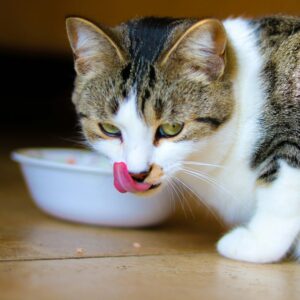
Yes, because wet and dry food differ significantly in calorie density.
Dry food is much more calorie-dense since the moisture has been removed. That means a small scoop of kibble can contain a high number of calories, making it easy to overfeed without realizing it. Even a slight overpour each day can add up over time.
Wet food contains far more moisture, often 70–80% water, so it typically has fewer calories per ounce. Portions may look larger in the bowl while delivering fewer total calories. The added moisture can also help support hydration and urinary health.
Another key difference is feeding style. Dry food is often free-fed because it doesn’t spoil quickly, but this makes portion control harder, especially in multi-cat homes. Wet food is typically served in measured meals, which naturally supports better intake tracking.
That said, the most important factor isn’t whether you feed wet or dry, it’s your cat’s total daily calorie intake. Many cats do very well on either option, or a combination of both, as long as portions are measured carefully and adjusted to their needs.
Precision matters more than preference.
Why Overfeeding Matters: The Real Dangers of Feline Obesity

Extra weight affects more than how your cat looks, it impacts how their body functions every day. Even a few extra pounds can increase strain on joints, reduce mobility, and interfere with long-term health.
Over time, obesity in cats has been linked to:
- Increased joint strain and early arthritis
- Higher risk of diabetes
- Reduced mobility and lower activity levels
- Difficulty grooming properly
- Shortened lifespan
- Decreased overall quality of life
It’s important to approach this topic with compassion. Many overweight cats are deeply loved, overfeeding is rarely neglect. More often, it’s small, unintentional overages that gradually add up.
The encouraging part? Small, consistent adjustments to portion size can make a meaningful difference in your cat’s long-term health and comfort.
Is Your Cat Actually Hungry — or Just Bored?

If your cat always seems hungry, boredom may be part of the reason. Indoor cats often have limited stimulation, and when there isn’t much to do, food can become the most exciting part of the day.
Begging is frequently habit-based, not hunger-based. If meowing in the kitchen sometimes leads to treats or extra scoops, cats quickly learn the routine, even if their calorie needs are already met.
Increasing daily enrichment can help reduce food fixation. Interactive play, food puzzles, and vertical climbing spaces encourage natural behaviors and shift focus away from the bowl. For some households, safe outdoor enclosures offer additional stimulation, fresh air, and movement, supporting a healthier, more balanced lifestyle overall.
Creating a Healthy Feeding + Lifestyle Plan
Feeding your cat well isn’t about guesswork, it’s about consistency and awareness. Start by measuring portions carefully rather than eyeballing scoops, and choose a food type (or combination of wet and dry) that fits your cat’s needs and calorie goals. Keep treats intentional and moderate, remembering that they count toward your cat’s daily intake.
Just as important is monitoring your cat’s body condition regularly. You should be able to feel their ribs without pressing hard and notice a defined waist from above. Small adjustments made early are far easier than major corrections later.
Finally, remember that nutrition works best alongside movement and enrichment. Daily interactive play, opportunities to climb, and an environment that encourages exploration all support a healthy metabolism and reduce food-focused behaviors.
At the end of the day, feeding is one part of a bigger wellness picture. When thoughtful nutrition is paired with an active, enriched lifestyle, you’re not just managing weight, you’re supporting your cat’s long-term health and quality of life.
Guest Article by Cat Topia.